
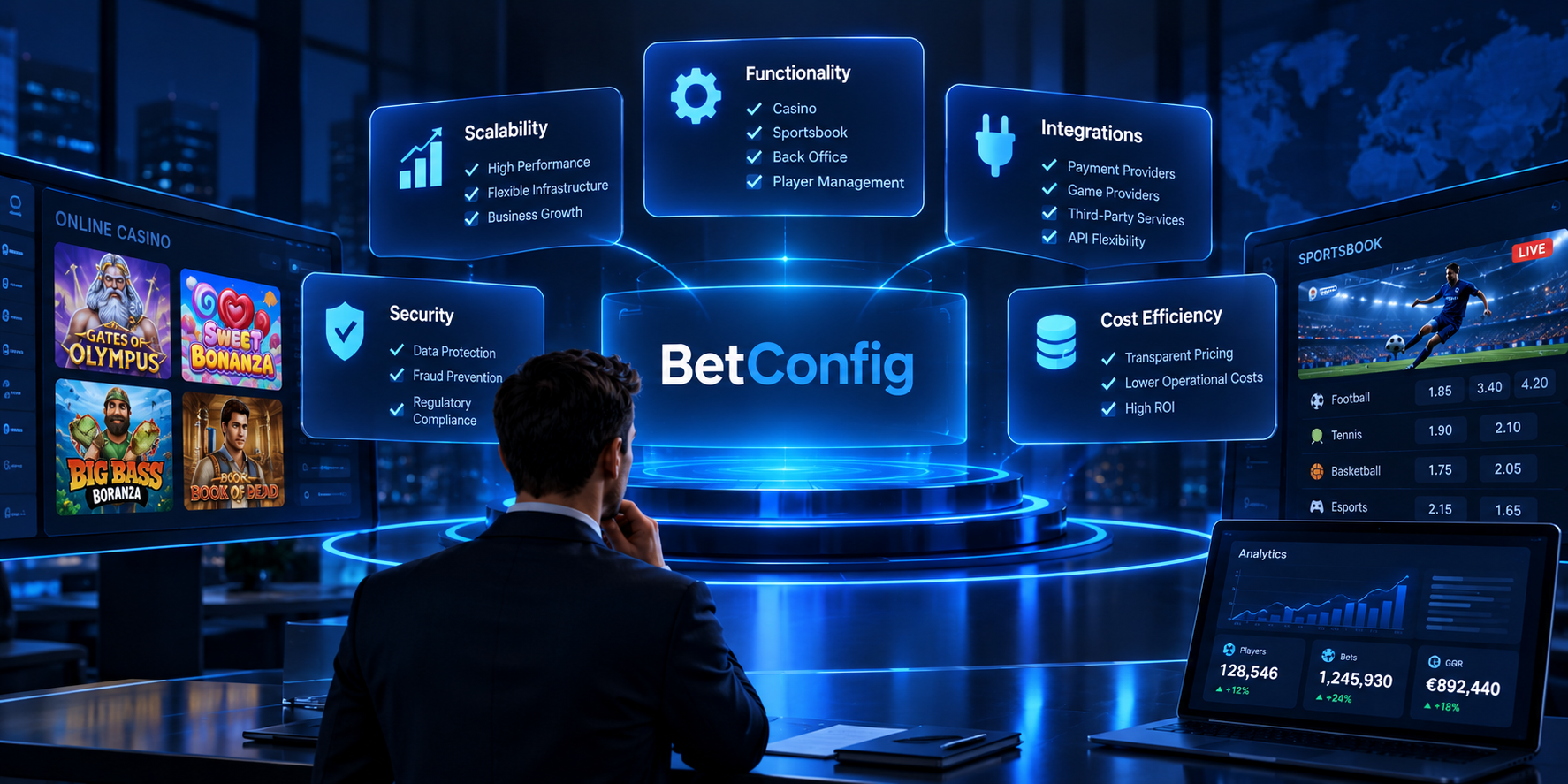
Choosing the right iGaming platform is one of the most important technology decisions for any online casino or sportsbook operator. The platform determines how efficiently a business can manage its operations, integrate third-party services, protect user data, and adapt to changing market requirements.
With numerous iGaming software providers offering different technologies and service models, selecting the right solution requires careful evaluation.
In this guide, we explore the essential factors operators should consider when choosing an iGaming platform, from functionality and scalability to security, integrations, and long-term operational costs.
1. Define Your Business RequirementsBefore comparing iGaming platforms, operators should establish their technical and operational requirements.
Different business models require different platform capabilities. An online casino may prioritize game aggregation and content management, while a sportsbook may require specialized betting infrastructure, event data integration, and settlement functionality.
Important questions include:
Will the project operate as an online casino, sportsbook, or combined platform?
Which markets and jurisdictions will the business serve?
What third-party services and integrations are required?
What level of control over the platform is necessary?
Does the business require a new implementation or migration from an existing system?
Defining these requirements early helps operators identify solutions that match their technical architecture and long-term business objectives.
2. Evaluate Core Platform FunctionalityA reliable iGaming platform should provide the essential tools needed to manage daily operations.
Depending on the business model, these capabilities may include:
Player account management
Casino content management
Sportsbook infrastructure
Payment and transaction management
Administrative back-office tools
Reporting and analytics
Access control and operational monitoring
An integrated back-office environment can simplify administration by allowing operators to manage different operational processes through a centralized interface.
When evaluating a platform, it is important to distinguish between features available by default and those requiring additional development or third-party integration.
3. Consider Platform Scalability and PerformanceScalability is a critical factor when selecting iGaming software.
As an operator's infrastructure grows, the platform may need to process more user sessions, transactions, data requests, and external API interactions.
A scalable architecture should be designed to accommodate increasing workloads without compromising system stability.
Key technical considerations include:
Server infrastructure and resource management
Database performance
API response times
Load balancing capabilities
System monitoring and availability
Capacity planning and infrastructure expansion
Operators should also ask potential technology providers how their systems handle peak traffic and unexpected increases in demand.
Performance testing, infrastructure documentation, and clearly defined service-level agreements can provide useful information during the evaluation process.
4. Check Integration CapabilitiesModern iGaming platforms depend on connections with multiple external systems.
These integrations may include game providers, payment processing services, identity verification solutions, analytics platforms, and other operational tools.
A flexible integration architecture can reduce development complexity and make it easier to maintain connected services.
When evaluating integration capabilities, operators should consider:
Availability of documented APIs
Supported third-party services
Authentication and authorization mechanisms
Integration testing environments
Data synchronization capabilities
Technical support for external integrations
The quality of an API is not determined solely by the number of available endpoints. Documentation, reliability, error handling, and compatibility are equally important.
5. Prioritize Security and Data ProtectionSecurity is an essential requirement for any platform that manages user accounts, financial records, and other sensitive information.
Operators should evaluate how potential providers approach data protection, system access, and operational security.
Important areas include:
Encryption of sensitive information
Role-based access control
Secure authentication
Activity logging and audit trails
Backup and recovery procedures
Infrastructure monitoring
Data retention and privacy controls
Regulatory requirements may vary depending on the jurisdictions in which an operator is authorized to operate.
A suitable platform should support the operator's ability to meet applicable legal, licensing, and data protection obligations.
Operators should verify relevant certifications, independent audits, and documented security procedures rather than relying exclusively on marketing claims.
6. Understand the Total Cost of OwnershipThe initial implementation price is only one component of the total cost of an iGaming platform.
Long-term expenses can include infrastructure, maintenance, integration development, technical support, software updates, and third-party services.
Before selecting a technology provider, operators should evaluate:
Initial setup and implementation costs
Recurring licensing or service fees
Infrastructure and hosting expenses
Third-party integration charges
Maintenance and technical support
Custom development requirements
Data migration costs
A transparent commercial agreement should clearly define which services are included and which require additional payment.
Evaluating the total cost of ownership helps businesses make more informed technology investment decisions.
7. Evaluate Migration and Data PortabilityFor operators with an existing online casino or sportsbook project, migration capabilities can be particularly important.
Moving to a different platform may involve transferring user accounts, transaction records, betting history, and other operational information.
Before selecting a provider, operators should determine:
Which data categories can be migrated?
What export formats are supported?
How will data integrity be validated?
Will historical records remain accessible?
What operational downtime may be required?
How will data protection requirements be addressed?
BetConfig offers operators the possibility of migrating existing iGaming projects to its platform.
Depending on the technical capabilities of the original system and the availability of source data, BetConfig aims to preserve as much compatible information as possible, including player accounts, deposit and transaction history, and historical betting records.
The exact migration scope is evaluated individually for each project.
8. Assess Technical Support and Long-Term CompatibilityChoosing an iGaming platform also means establishing a long-term relationship with a technology provider.
Even a technically capable system may create operational difficulties if documentation, maintenance, or support processes are insufficient.
Operators should assess:
Availability of technical documentation
Support channels and response procedures
Incident management processes
Software maintenance practices
Update and release management
Compatibility with future integrations
Contractual responsibilities and service commitments
A provider's ability to maintain and evolve its technology is an important consideration for long-term infrastructure planning.
9. Compare Platform Providers Using Clear CriteriaRather than evaluating providers exclusively through presentations or feature lists, operators can use a structured comparison process.
A practical evaluation framework might include the following categories:
Evaluation AreaWhat to CheckFunctionalityRequired modules and operational toolsScalabilityCapacity, performance, and infrastructure designIntegrationsAPIs, documentation, and external servicesSecurityData protection and access controlsComplianceSupport for applicable regulatory requirementsMigrationData portability and transition planningCostsImplementation and long-term expensesSupportTechnical assistance and maintenance processesThis approach helps identify technical differences and potential limitations before implementation begins.
10. Consider BetConfig for Your iGaming InfrastructureBetConfig is a B2B technology platform focused on iGaming infrastructure, including casino and sportsbook solutions.
For operators evaluating alternative platforms, BetConfig can be considered as part of a broader technical assessment.
One of the areas BetConfig supports is migration from existing iGaming systems, with an emphasis on preserving compatible operational data wherever technically possible.
Operators can discuss their current infrastructure, technical requirements, integration needs, and migration objectives with the BetConfig team to determine the available implementation options.
ConclusionSelecting the right iGaming platform requires more than comparing software features or initial pricing.
Operators should consider architecture, integration flexibility, scalability, data security, operational costs, and the provider's ability to support future technical requirements.
A structured evaluation process can reduce implementation risks and help businesses select infrastructure aligned with their operational needs.
If you are evaluating iGaming technology solutions or considering migrating an existing project, contact BetConfig to discuss your technical requirements and available platform options.